
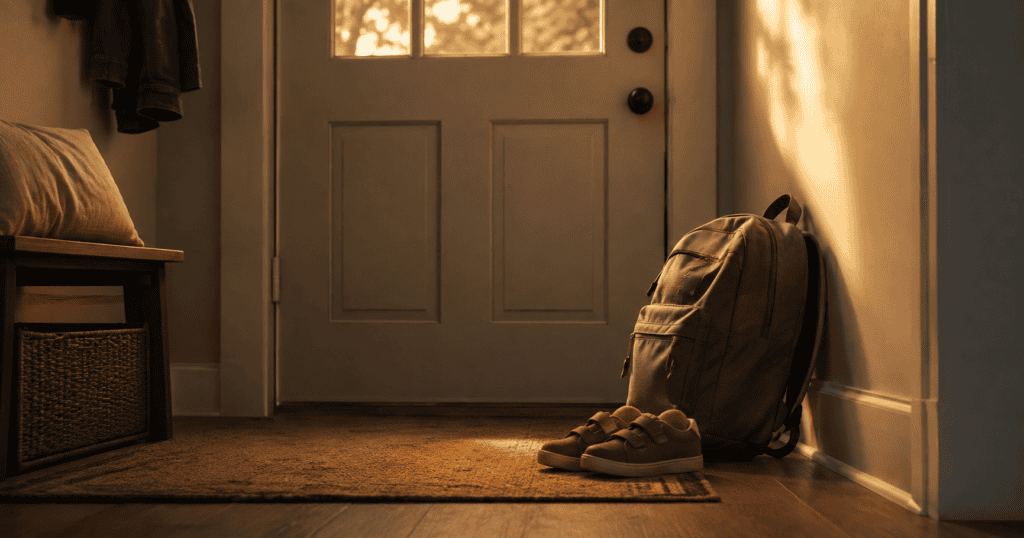
Wondering about the signs your child is being bullied? Most children do not walk through the door and say the word “bullied.” Research from NSPCC and other child protection organisations suggests only around 40–50% of bullied children ever tell a parent — which means the signs, more often than the words, are what parents actually have to go on.
Here are five signs your child is being bullied that tend to get missed, dismissed as a phase, or explained away by something else entirely.
1. Sudden Reluctance About School — Without A Clear Reason
Stomach aches on school mornings. A new pattern of “forgetting” homework or supplies. Requests to stay home that feel oddly specific to weekdays. Children rarely name school avoidance as fear — it often surfaces as a physical complaint or a vague mood shift, because naming the real reason can feel too exposing, even to a parent they trust.
2. Changes In Friend Groups Or Social Patterns
A child who suddenly stops mentioning a friend they talked about constantly. Fewer invitations, fewer sleepovers, more time spent alone in their room. This shift can be quiet and gradual rather than dramatic, which is exactly why it is easy to miss — it can look like a child simply “growing out of” a friendship rather than being pushed out of one.
3. Unexplained Changes In Belongings
A backpack, phone case, or piece of clothing that goes missing or comes home damaged, with an explanation that does not quite add up. Children who are being bullied — particularly online — will sometimes go to lengths to avoid a parent seeing a device, a group chat, or a comment thread. Secrecy around belongings is rarely about the object. It is usually about what the object might reveal.
4. A Drop In Confidence That Does Not Match Their History
A child who was previously comfortable speaking up in class, trying new things, or asserting an opinion becomes noticeably quieter, more apologetic, or more hesitant to be seen. This shift in baseline confidence — not shyness as a personality trait, but a visible change from how they used to be — is one of the signs most consistently linked to bullying in child psychology research, and one of the easiest to attribute to “growing up” instead.
5. Physical Symptoms With No Medical Explanation
Headaches, stomach aches, trouble sleeping, or changes in appetite that a doctor cannot connect to anything physical. According to CDC and StopBullying.gov research, chronic stress in children — including stress caused by bullying — can genuinely produce physical symptoms. The body registers social threat much like it registers physical threat, especially in children who do not yet have the language to describe what they are experiencing emotionally.
Noticing These Signs Your Child Is Being Bullied?
Noticing one of these signs is not proof. Noticing several, together, over a sustained period, is worth taking seriously enough to open a conversation — one that does not start with “are you being bullied,” which can feel like an accusation a child has to defend against, but with something quieter: “you seem different lately, I’m here whenever you want to talk.”
Bullying is a risk factor that can affect a child’s wellbeing — it is one piece of a much larger picture, never the whole explanation on its own, and never something a child brought on themselves. What matters most is that a child does not have to face these signs your child is being bullied alone. Parents who stay calm, keep the conversation open, and avoid reacting with panic tend to see their child open up faster and more fully over time. For more support, our free parent guide covers this in more depth, including what to say, what to avoid, and how to work with a school once bullying is confirmed.